

 HiNews
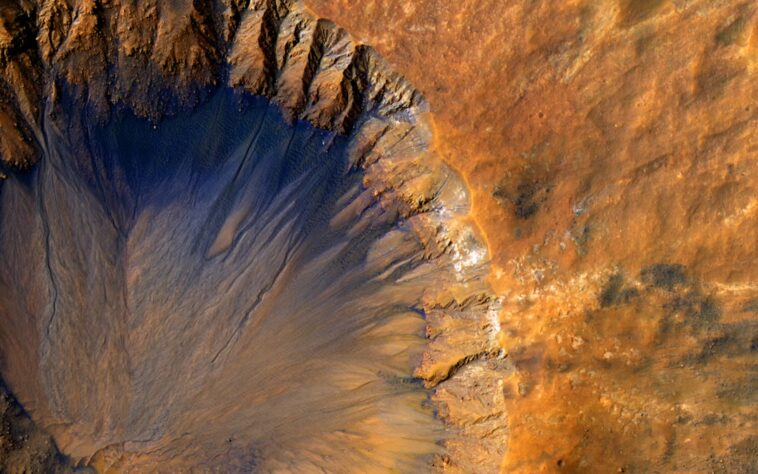
For centuries, scientists and space enthusiasts have been fascinated by Mars, also known as the “Red Planet.”. Due to its proximity to Earth & the possibility that it may contain signs of life, Mars, the fourth planet from the Sun, has long been a sought-after location for space exploration. We will examine the importance of Mars in space exploration and talk about the numerous missions and findings that have influenced our knowledge of this mysterious planet in this piece. Astronomers have been observing and studying Mars since ancient times, drawn to the planet’s unique reddish color and its apparent motion through the night sky.
Early observations of Mars produced a number of theories about the planet because of its intriguing features, which included dark patches & polar ice caps. Giovanni Schiaparelli, an Italian astronomer, popularized the belief in canals on Mars in the late 1800s, making it one of the most well-known theories about the planet. Since Schiaparelli saw linear features on Mars, he conjectured that these features were man-made canals built by a sentient civilization. Public curiosity in Mars was piqued by this theory, which generated a great deal of conjecture regarding the possibility of life there. In an effort to investigate Mars and solve its mysteries, many missions have been launched over time.
The Viking program, which comprised the two spacecraft Viking 1 & Viking 2, which made a successful landing on Mars in 1976, was one of the first and most important missions. Important information about the planet’s atmosphere, weather, and soil composition was made possible by these missions. Even though the Viking missions were unable to discover concrete proof of life on Mars, they did pave the way for more advanced missions and future exploration. The Mars rovers have been essential in recent years in helping us learn more about the planet Venus.
With the purpose of gathering information and taking amazing pictures, the Mars rovers Spirit, Opportunity, and Curiosity have explored the Martian surface. The geology, climate, and possibility of past habitability of Mars have all been greatly enhanced by these rovers’ contributions. For example, the finding of organic molecules on Mars and the discovery of ancient riverbeds have strengthened the theory that life existed on the planet in the past. Because of its similar size and makeup to Earth, Mars is sometimes referred to as Earth’s “sister planet.”. Mars is roughly half the size of Earth, with a diameter of 6,800 kilometers.
It is also the second smallest planet in our solar system, with an average distance of 225 million kilometers from the Sun. Its varied and fascinating geological landscape is one of Mars’ most remarkable features. Olympus Mons, the solar system’s largest volcano, is located on this planet & reaches a dizzying height of 13,6 miles (22 kilometers). Valles Marineris, the longest canyon on Mars, is four times deeper than the Grand Canyon on Earth & spans more than 2,500 miles (4,000 kilometers).
These geological features offer important hints regarding the volcanic activity & geological past of Mars. Mars and Earth are similar planets, but there are also big differences in their atmospheres and weather systems. Nitrogen & argon are present in trace amounts in the thin atmosphere of Mars, which is primarily carbon dioxide. Mars has extremely high and low temperatures due to its lack of a significant atmosphere.
The average temperature of the planet is -80 degrees Fahrenheit (-62 degrees Celsius) to -195 degrees Fahrenheit (-125 degrees Celsius). The weather patterns on Mars differ from those on Earth as well. Dust storms that last for months can cover the entire planet. Not only can these storms impact the performance of rovers and other spacecraft on the surface, but they can also have a major effect on the climate of Mars. Searching for evidence of extant or past life is one of the main goals of Mars exploration. Although there isn’t any solid proof of life on Mars, there have been a number of fascinating finds that raise the possibility.
The fact that liquid water exists on Mars is among the strongest pieces of evidence. NASA reported in 2015 that they had found hydrated salts on the surface of Mars, suggesting the existence of briny flows, or liquid water. Given that water is essential to the emergence and maintenance of life as we know it, this discovery has sparked speculation that Mars might contain the elements needed for life to exist. Also, the possibility of life on Mars has been further stoked by the discovery of organic molecules, which are the building blocks of life.
Organic molecules have been found in Martian rocks by the Curiosity rover, indicating that the planet may have once supported life. In recent years, space agencies & private businesses have been actively investigating the possibility of human colonization on Mars. Mars is a desirable destination for human settlement in the future because of its similarities to Earth, including its size and resource availability. Nonetheless, there are a lot of difficulties & barriers in the way of Mars colonization. Significant technological advancements would be necessary to ensure the survival and well-being of human settlers in the harsh environment of the planet, which includes high radiation levels, extreme temperatures, and a thin atmosphere.
The lengthy space mission needed to reach Mars and the practical difficulties in setting up a self-sufficient colony provide additional obstacles. The advantages of colonizing Mars are enormous, despite these difficulties. A human presence on Mars might pave the way for future space travel and the eventual colonization of other planets. It might also advance our knowledge of the universe and offer insightful information about the possibility of life beyond Earth.
There have been difficulties and roadblocks in the Mars exploration process. Given that it takes several months for spacecraft to reach Mars, the distance between Earth and the planet presents significant logistical challenges. Numerous risks, such as radiation exposure & the requirement for long-term life support systems, are associated with this extended space mission for the crew and the spacecraft. Moreover, a major barrier is the expense of Mars missions.
Significant financial resources are needed for the development & launch of spacecraft as well as for the upkeep of rovers and other equipment on Mars. A complicated and competitive process frequently involves space agencies and private businesses fighting for few funding slots for these missions. Despite these obstacles, a great deal of progress has been made in their removal.
Technological developments like enhanced propulsion and more effective life support systems have increased the viability of Mars exploration. Our understanding of Mars has also advanced thanks to international cooperation and alliances between space agencies that have made it possible to share resources and knowledge. With multiple missions and plans in the works, the future of Mars exploration appears bright. After making a successful landing in February 2021, NASA’s Perseverance rover is presently carrying out research to look for evidence of previous microbial life and gather materials for eventual return to Earth.
An significant turning point in our investigation into the secrets of Mars is this mission. Other upcoming missions include NASA’s Mars Sample Return mission, which aims to return samples from Mars for in-depth analysis on Earth, and the European Space Agency’s ExoMars rover, scheduled for launch in 2022. These missions will set the stage for future human exploration while offering hitherto unseen insights into Mars’ geological past & potential for life. For a number of reasons, it is crucial to carry out more investigation and research on Mars.
First of all, Mars is a perfect place to study the natural processes that shaped Earth. Through examining the climate, atmosphere, and geology of Mars, scientists can learn a great deal about the past & future of Earth. Second, the search for life on Mars—both past and present—may yield important hints about the existence of extraterrestrial life & throw light on the origins of life on Earth. This is one of the most important questions that humanity faces and one that Mars exploration may help to answer: Are we alone in the universe? Finally, research and development on Mars could spur innovation and technological progress.
The harsh environment on Mars presents challenges that call for the development of innovative technologies and solutions that may have extensive uses on Earth. The technologies created for Mars exploration have the potential to improve the quality of life on Earth and benefit many industries, ranging from robotics and artificial intelligence to sustainable life support systems. In summary, Mars is extremely important for space exploration because of its similarity to Earth, diversity of geology, and possibility for life.
We have learned a great deal about Mars through previous and current missions, covering everything from its physical features and weather patterns to the possibility of human colonization. Still, there is a lot to understand and find out about this mysterious planet. As we embark on future missions and plans for Mars exploration, let us remain steadfast in our pursuit of knowledge and continue to push the boundaries of human exploration. Research and exploration into Mars are essential to solving its mysteries, expanding our understanding of the universe, & possibly providing an answer to one of humanity’s most profound questions: Are we alone?